
San Jose Voter Registration Lookup
Start with the California Secretary of State's registration-status entry page, which opens My Voter Status. It is a personal lookup, not a public name index. A San Jose voter supplies identity details so the system can match the correct entry. The result can confirm current status, registered name, party preference, language, voting location for an upcoming election, email preference for the Voter Information Guide, and county elections contact information.
The fields can change with the tool version, and an identity field may ask for a California driver license or identification number or the last four digits of a Social Security number. County or ZIP fields may also appear. Use the values tied to your own registration.
| Field | Type | Required | Notes / Format |
|---|---|---|---|
| First Name | Text | Yes | Personal voter match |
| Last Name | Text | Yes | Personal voter match |
| Driver license, state ID, or last four SSN | Identity field | Varies | May be needed for an identity match |
| Date of Birth | Date | Yes | Used to match the registration |
| County or ZIP | Dropdown or text | May appear | Visibility varies by tool version |
| Submit or Continue | Button | Yes | Runs the private status check |
The live My Voter Status screen shows the official identity-check entry point used by San Jose voters.
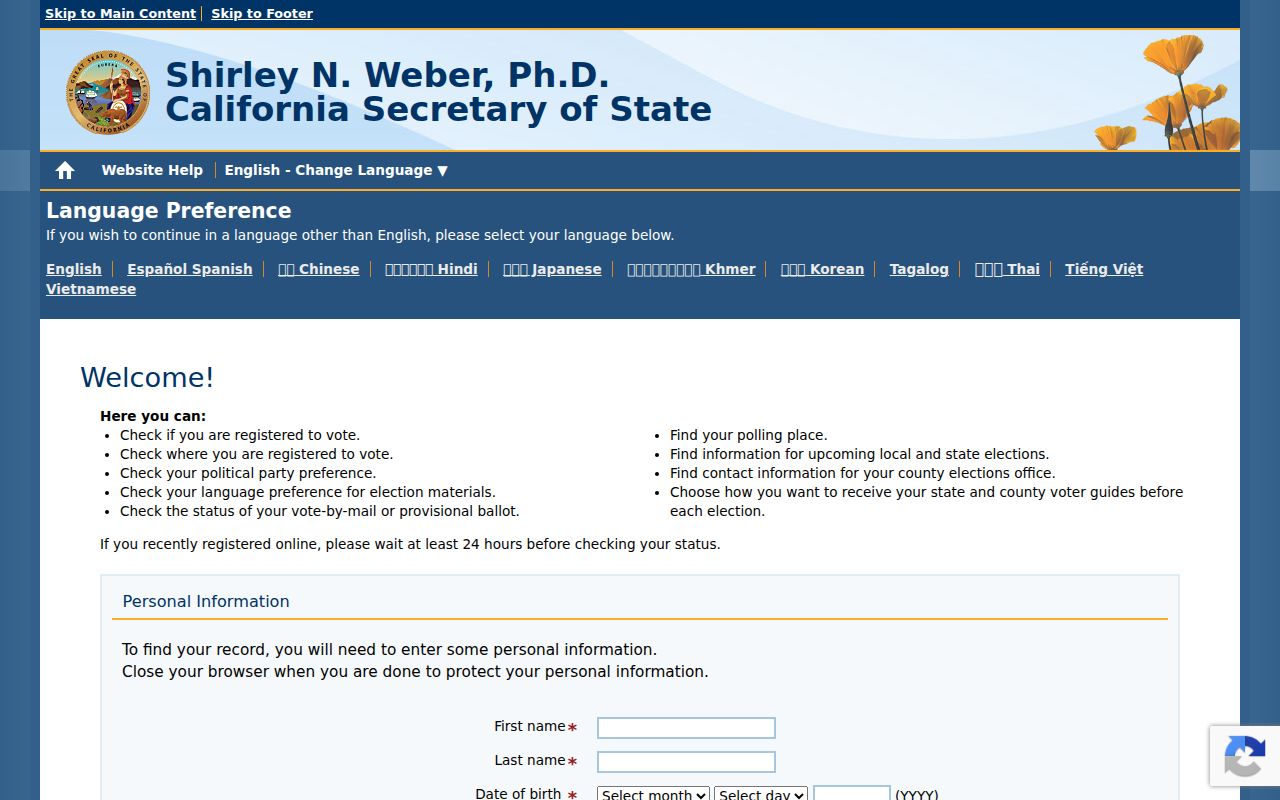
That screen reinforces the key boundary: it checks one voter's own record instead of exposing a list of names and addresses.
VoteCal Connects San Jose Records
VoteCal is California's centralized voter records database. It became the state's official system of record on September 26, 2016. Santa Clara County election administration feeds the statewide system, while My Voter Status gives each voter a limited view of matched information.
State regulations require ballot-status and voter-participation history data to move through the system and appear in the personal status tool. Participation history means that the record can note which election a person took part in. It never shows how that person voted. Ballot choices remain secret.
For San Jose residents, the Santa Clara County Registrar of Voters remains the local election office. The Secretary of State controls the statewide file-request route and California's access rules. General open-record principles are covered separately in the San Jose public records overview, but they do not turn the voter roll into an open public directory.
Note: A status such as active, inactive, or cancelled is an administrative record, not a statement about any voter's ballot choice.
San Jose Voter Registration Limits
California treats voter registration information differently from ordinary agency records. Elections Code § 2194 bars affidavit information identified by Government Code § 7924.000 from routine public display at a county elections office. It may not appear on a generally available terminal, list, affidavit, duplicate affidavit, or similar medium.
Access may be approved for candidates, committees, or people carrying out election, scholarly, journalistic, political, or governmental work, as determined under state rules. That is a limited-purpose file process. It is not a way to browse neighbors, find private contact details, advertise, solicit, or publish voter data online.
The official California confidentiality statute shows where routine public access stops.
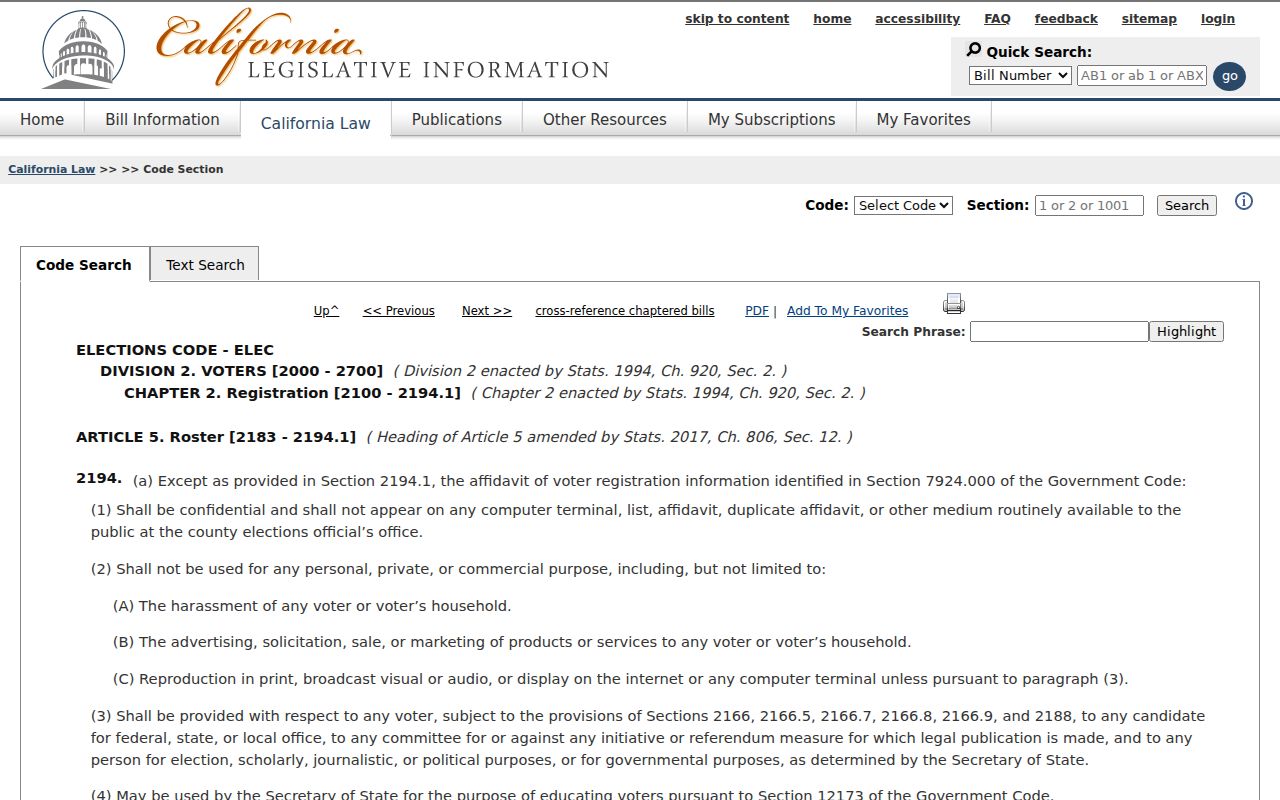
The statute is the source for both the protected fields and the approved-purpose standard applied to voter-file requests.
Fields in California Voter Records
A California voter record contains more than the small set visible through a personal status check. Some fields may be released only in an approved voter-file context, and confidential-voter protections can remove an entry from that release. The inventory below separates the purpose of each field from the mistaken idea that all fields are open to the public.
| Name | May be released for a non-confidential voter in an approved file context |
|---|---|
| Residence or mailing address | Restricted from routine display; may appear for permitted purposes unless the voter is confidential |
| Party preference | Shown to the voter and may appear in an authorized file |
| Registration status and date | Tracks current status and registration history |
| Precinct and districts | Connects a registration to election geography |
| Participation history | Shows elections in which the voter participated, never ballot choices |
| Phone, email, and birth date | Restricted identifying and contact information |
| Driver license, state ID, SSN, identifiers, signature | Confidential and not part of routine public access |
Confidential under California law. Elections Code § 2194 protects driver license and state ID numbers, Social Security numbers, other unique federal identifiers, and signatures. Confidential-voter records are excluded from public voter registration data requests.
A signature can be viewed only in narrow legal circumstances and cannot be copied. A specific voter-record request must provide enough identifying detail to locate the right person, but that does not make the supplied or returned identity details generally public.
Safe at Home Voter Protection
California's Safe at Home program keeps a participant's address confidential and out of public records as one part of a wider safety plan. It serves eligible people affected by domestic violence, stalking, sexual assault, child abduction, elder or dependent-adult abuse, and human trafficking.
Safe at Home participants should not use the standard online voter registration site. The Secretary of State directs them to contact the program at 877-322-5227 so registration can follow the protected process. This rule matters both when registering and when requesting data, because confidential voter records are excluded from Public Voter Registration Data Requests.
The official Safe at Home program page explains the address shield available to eligible California residents.
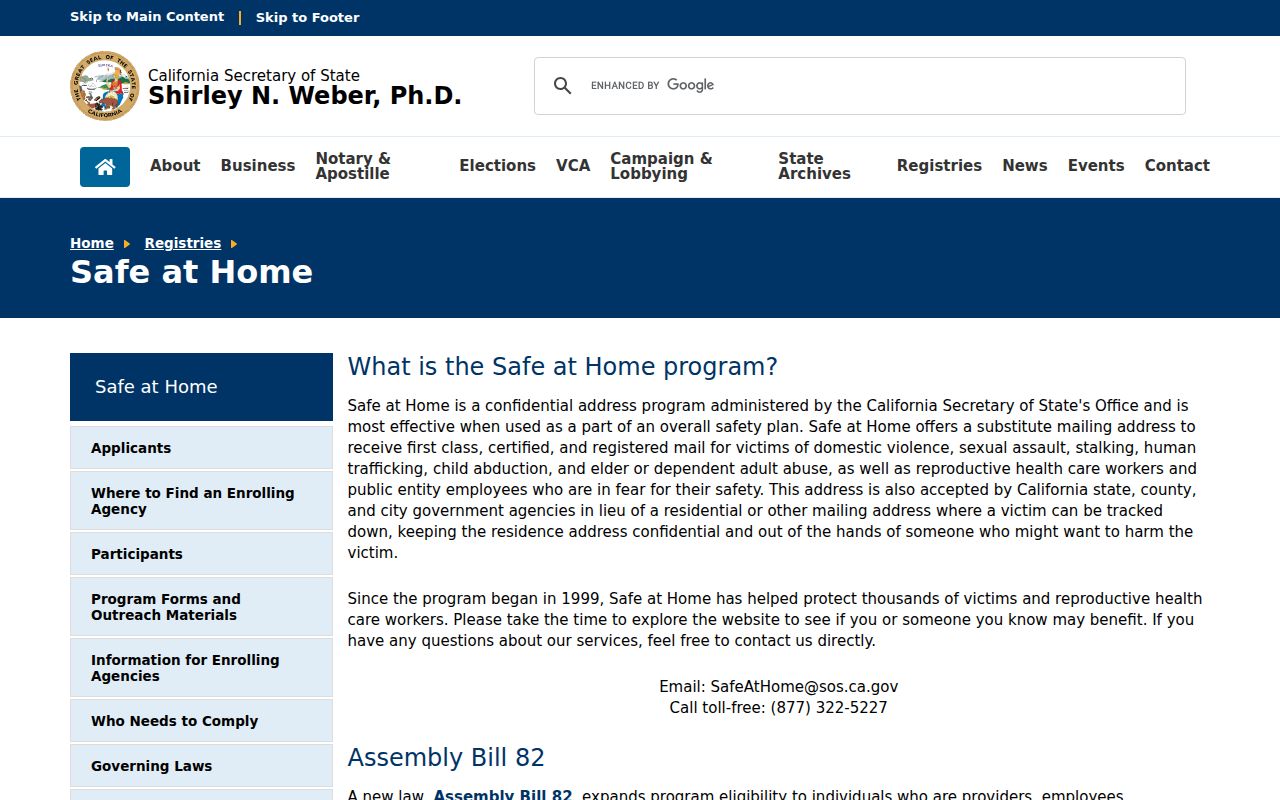
That separate registration path helps keep a protected San Jose voter's actual home address out of ordinary records.
Requesting California's Voter File
The Secretary of State's voter-registration information request page is the primary documented route for a file that includes San Jose registrations. Applicants must show an approved purpose and describe the requested data. Supporting proof may include political affiliation documents, an institutional letter for scholarly work, or a press or media credential for journalistic work.
- Complete the California Voter Registration File Request with applicant, contact, and beneficiary information.
- Explain the intended election, scholarly, journalistic, political, or governmental use and attach the proof that fits that purpose.
- Identify the file needed, such as voter history, precinct-to-district data, a jurisdiction, or specific voter information. Add shipping details and the required security explanation.
- Initial the use, sharing, and security agreements. Mail or hand-deliver the form to the Secretary of State, Elections Division, 1500 11th Street, 5th Floor, Sacramento, CA 95814. Email and fax are not accepted.
- Allow the stated 7 to 14 business days after receipt for review and processing. Applications are handled in the order received.
The state charges $15 per 1,000 records, with a $15 minimum and $100 maximum. A specific voter registration record costs $30, up to $100, and each request is limited to ten specific records. Approved data is delivered on an encrypted DVD as tab-delimited text files. The SOS elections phone listed for the process is 916-657-2166.
San Jose Voter File Channels
Current records and historical registers use separate channels. This split prevents a failed online status check from becoming a search for a downloadable public list. It also directs family-history research to sources built for older material.
| Need | Channel | Access Method | Result |
|---|---|---|---|
| Own current status | My Voter Status | Online identity match | Status, registered details, election information |
| Local election help | Santa Clara County Registrar of Voters | County elections office | County registration and election administration |
| Approved voter file | California Secretary of State | Mail or hand-delivered application | Encrypted tab-delimited data after review |
| Historical voter research | San José Public Library | Hardback volumes and microfilm | Santa Clara County and San Jose Great Registers |
The county Registrar serves San Jose, while the statewide request standards come from the Secretary of State, Elections Code, and VoteCal rules. The research source did not document a separate county voter-file application field inventory, so the state form remains the supported acquisition route here.
Limits on San Jose Voter Use
An approved file is bound to its stated purpose. Applicants and beneficiaries agree not to sell, lease, loan, deliver, or reproduce the information except as state law permits. The data also may not be sent outside the United States under Elections Code § 2188.5.
Prohibited uses include private or commercial use, harassment of a voter or household, advertising, solicitation, sale, marketing, and unauthorized internet display. Elections Code § 18109 makes knowing misuse a misdemeanor. It also makes knowing acquisition or use from the Secretary of State or a county elections official a misdemeanor when the person has not complied with the access law.
Purpose controls access. A source agency may deny a voter-file request when it appears aimed at harassment, fraud, bad faith, or another prohibited use.
California also has broader anti-harassment and anti-doxing laws. Never use a voter record to threaten, track, expose, or cause unwanted contact with a person.
Historical San Jose Voter Registers
Family-history research does not require access to a restricted current file. San José Public Library genealogy holdings include Santa Clara County Great Registers in hardback for 1867, 1879, 1880, 1884, 1890, and 1896. Microfilm continues county coverage from 1900 through 1944.
City of San Jose Great Registers are held in hardback for 1946, 1948, 1950, 1952, and 1956. These local volumes help trace an eligible voter across time while keeping modern identity and contact fields outside the task. They are especially useful for family history, neighborhood history, and confirming a past San Jose residence.
This historical route fills a real archive gap. The California State Archives lists many Santa Clara County record groups, but the researched state holdings did not identify the same local Great Register run. The library's volumes and microfilm are therefore the stronger documented path for San Jose voter history.
CPRA Does Not Open Voter Rolls
The California Public Records Act generally supports access to state and local agency records. Express confidentiality rules still control. Voter affidavits and protected identity fields fall within that exception structure, so a broad CPRA request cannot bypass Elections Code § 2194 or the voter-file application process.
The official Government Code division containing CPRA provides the larger records-law setting.
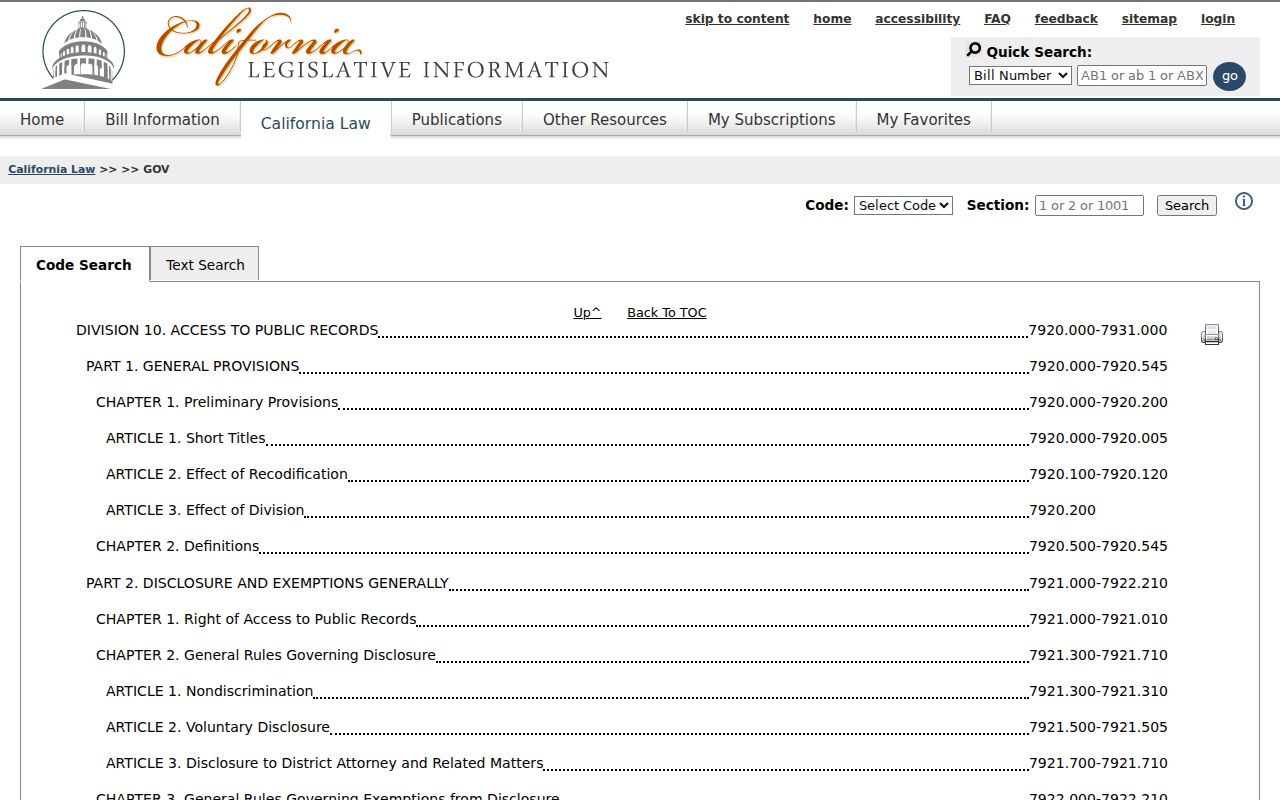
Read that framework together with the elections statute: general access law and voter-specific confidentiality work side by side.